Short version
Fluid Momentism is the artistic approach through which I explore the relationship between thought, time and the transformation of form.
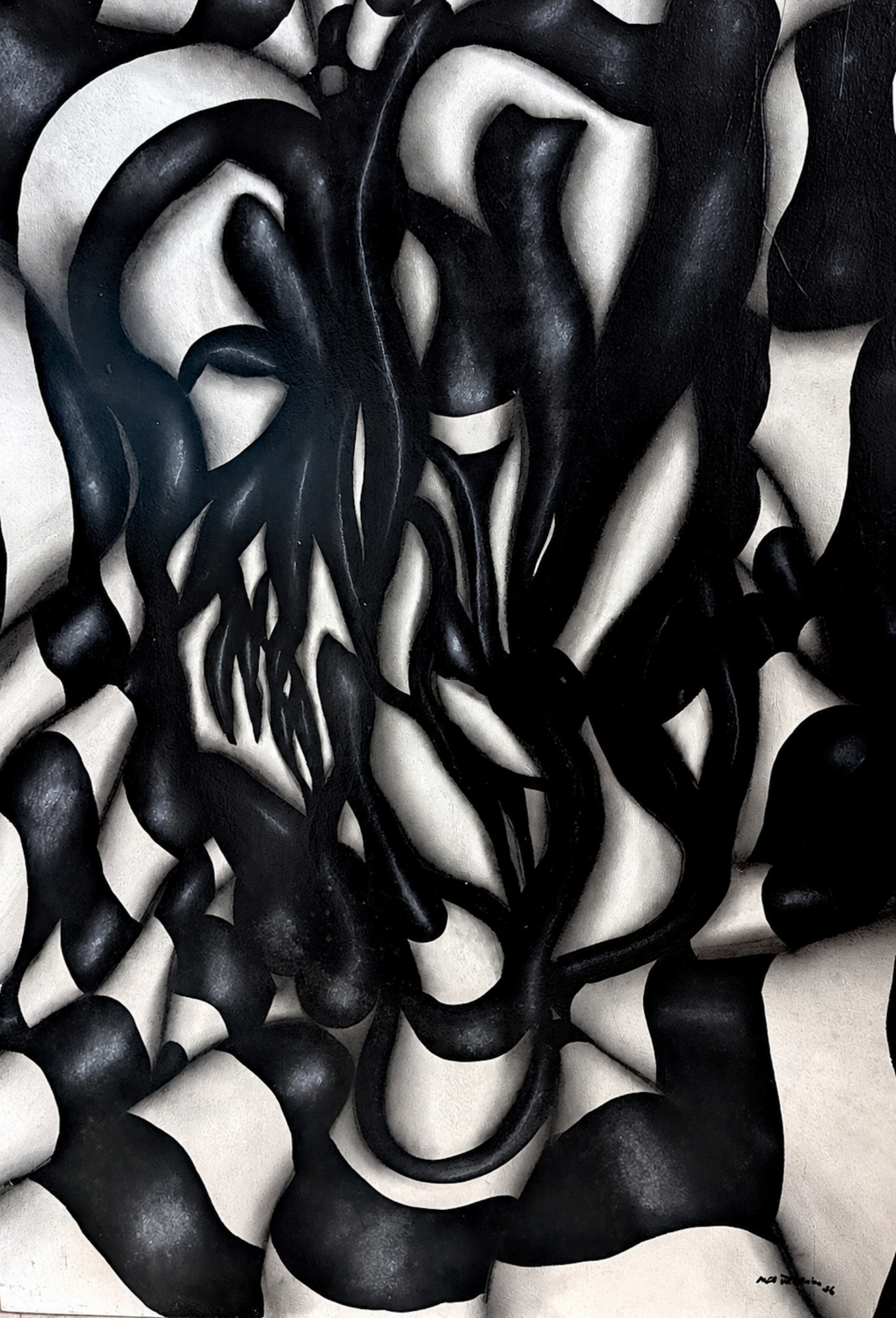
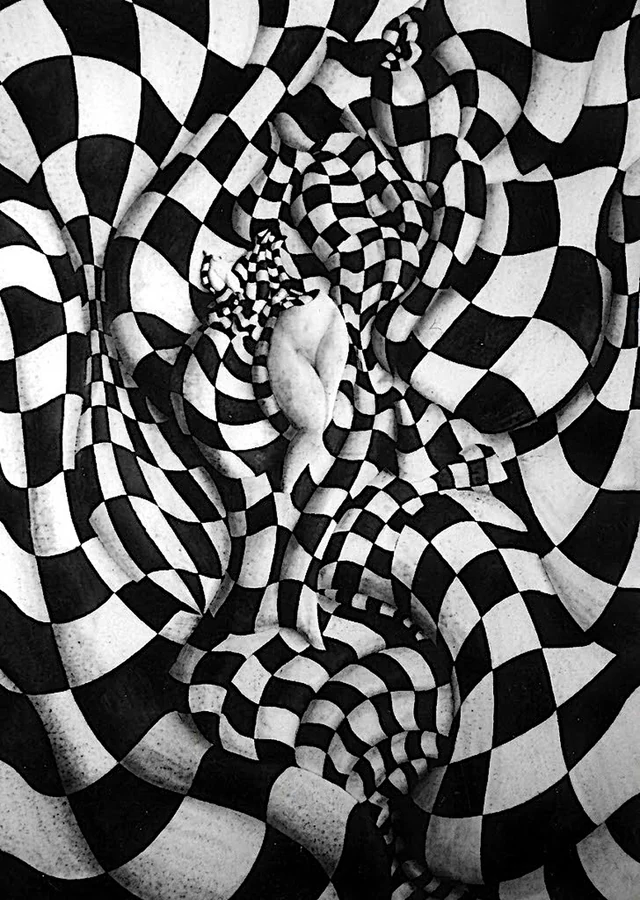
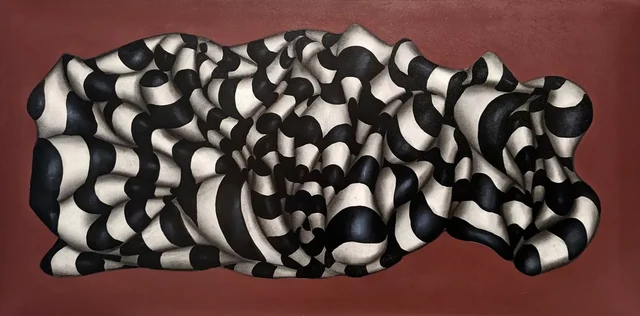
In my work, grids and checkerboards bend into organic structures, volumes and interwoven forms. Black-and-white contrasts, tonal gradations and colour create a tension between the actual surface and perceived depth.
Each work develops through decisions that can alter the initial intention. The image preserves traces of this process and remains open to the different readings of those who encounter it.
Read the full manifesto
I do not paint what I think. I paint thought as it moves.
1. Form changes
Fluid Momentism is my artistic approach. It begins with the idea that thought has no definitive form: it encounters memories, sensations and images, and changes through these relationships.
I use Fluid to name this mutability. Momentism names the attempt to give it form at a moment in its becoming. The painting holds a configuration of thought without exhausting its movement.
2. Time enters the work
Every work develops over time. Between the first mark and the last, the decisions, perceptions and intentions that guide my work change.
The initial image sets a direction, but what happens on the surface can alter it. A line suggests a fold; an area of shadow shifts a volume; a contrast opens an unexpected direction.
The painting gathers these transformations. Its final form also emerges from what I had not anticipated.
3. Geometry bends
The grid, the square and the checkerboard recur in my work. They introduce a recognisable order of repetitions, intervals and contrasts.
Through curves, torsions and changes in light, this order loses its rigidity. The checkerboard follows the folds, contracts, expands and helps to construct the perception of volume.
Geometry remains legible as it changes. My practice takes shape within this tension between regularity and deformation.
4. Thought becomes visual matter
In my work, fluidity takes the form of surfaces that yield, curl and intertwine. The forms may suggest bodies, roots, fabrics or cores without necessarily corresponding to a specific object.
These resemblances remain open. I am interested in the transition through which a form seems to become something else while retaining traces of what we could recognise.
The movement of thought thus finds a visual counterpart in the transformation of the matter depicted.
5. Contrast, colour and depth
Black and white makes the alternation of surfaces apparent and allows the eye to follow their deformations. Tonal gradations create passages between light and shadow; contours distinguish forms or trace their continuity.
Colour changes these relationships. It can isolate a figure, create tension between background and volume, or introduce a different rhythm into the composition.
I use these elements to explore the boundary between surface and depth: what is flat can appear solid; what seems compact can suggest a fold or an opening.
6. The work preserves a process
When I finish a work, I recognise in the image the decisions and changes that shaped it. Some intentions have remained; others have become less important or made room for new possibilities.
The work bears witness to this process. I see it as a form arrived at through making, bound to the time and conditions in which it came into being.
7. Looking opens form anew
Viewers may recognise different figures, follow other connections or dwell on a detail that played a secondary role for me.
The painting’s surface remains the same, while its interpretation can change. This openness belongs to the work: the image offers a structure within which the eye can move.
Through Fluid Momentism, I seek a form that can hold change and allow it still to be perceived.
Massimo Castronuovo